WorldMark by Wyndham · 2020
A reusable travel ecosystem for WorldMark and Club Wyndham
Making the path from inspiration to arrival feel certain.
I designed across public marketing, signed-in owner tools, and a reusable Adobe AEM component system. The work connects destination discovery, ownership value, availability, booking, and trip management while preserving the voice of two distinct brands.
Role
Senior Product Designer
Product strategy, interaction design, responsive systems, prototyping, and cross-functional delivery.
Scope
WorldMark and Club Wyndham marketing and owner experiences, delivered through a reusable Adobe AEM component system.
Platform
Responsive desktop, tablet, and mobile web across public and signed-in experiences.
Product areas
Homepage, search, resort discovery, resort details, booking, reservations, credits, account management, and cross-brand components.
How might we
Connect destination inspiration, owner planning, and reusable cross-brand delivery without flattening WorldMark and Club Wyndham into the same experience.
So that
travelers can move from discovery to booking with confidence while shared components remain efficient to operate and each brand stays recognizably its own.
Problem definition
The brand promised more time. The digital ecosystem had to make that promise usable.
WorldMark served prospective travelers, current owners, and people actively planning a trip. I had to give each audience the right amount of inspiration, education, account context, and transaction detail without making the ecosystem feel like a collection of separate products.
Discovery and ownership served different intentions
The public website had to build desire and explain value, while the owner system had to support precise, high-consequence travel decisions.
Ownership is not a standard checkout
Credits, certificates, housekeeping, availability, and membership rules create a planning model that conventional hotel booking patterns do not cover.
Context had to survive the handoff
Destination, date, unit, price, credit, and traveler information needed to remain understandable from search through confirmation.
The system had to travel across screens
Public storytelling and authenticated tasks both needed deliberate mobile behavior, not scaled-down desktop layouts.
Owner context
The reservation is one moment in a longer relationship with travel.
I used the owner persona to shift the design conversation from completing a transaction to helping a family move between inspiration, account resources, booking, and trip management.
Research artifact
A family traveler makes the product’s hidden constraints visible.
Goals, habits, motivations, confidence, and objections gave the team a shared way to evaluate whether a design supported planning or simply exposed system structure.
01
Plan around real life
Travel decisions happen alongside school calendars, work schedules, family coordination, and peak-season availability.
02
Protect ownership value
Credits are not an abstract balance. Owners need to understand how each trip uses the value they hold.
03
Build confidence before commitment
Dates, resort details, availability, and reservation state must remain visible long enough to support a decision.
04
Return to the trip
The relationship continues after booking through changes, cancellation, directions, details, and planning what comes next.
Marketing website
Inspiration became a system, not a single hero image.
I designed the public experience to build desire while still helping people understand where they could go, what made each resort distinct, which offers were available, and how WorldMark ownership fit into the trip.
Homepage
One front door for travel ideas, owner value, and next actions.
The page establishes a modular editorial rhythm across news, featured resorts, deals, the WorldMark promise, ownership benefits, and inquiry. The same hierarchy is reorganized deliberately for mobile.
A
Editorial hierarchy
Each module has a clear purpose and an independent path deeper into the ecosystem.
B
Responsive composition
The mobile design changes order, density, and card behavior instead of simply stacking the desktop page.
01
Homepage orchestration
Balanced news, featured resorts, offers, brand storytelling, ownership education, and lead capture in a single responsive entry point.
02
Destination discovery
Supported browsing by location, list, map, and inventory opportunity so travelers could enter through different planning mindsets.
03
Resort evaluation
Brought photography, amenities, unit types, availability, location, and reviews into one decision-support page.
Resort discovery
Support different ways into the same destination set.
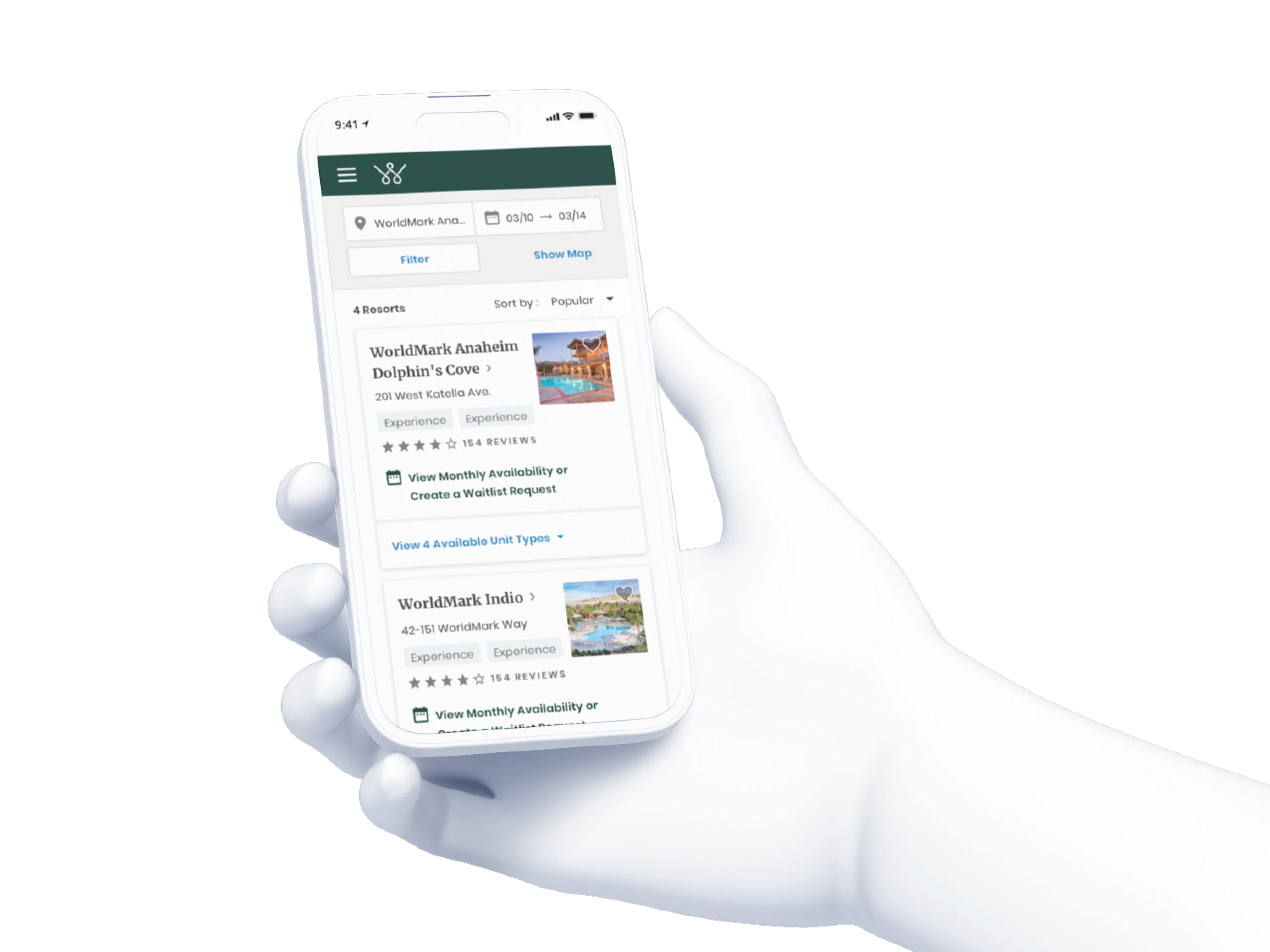
Location browsing, list and map views, filters, favorites, and inventory specials give travelers several useful entry points without fragmenting the resort catalog.
Resort details
Turn destination interest into an informed decision.
Photography, amenities, unit types, availability, location, and reviews build a complete evaluation surface before the traveler enters the reservation flow.
The on-page crops preserve the case-study rhythm. Every screen opens into the shared media viewer for a full-height inspection of the original design.
Click to expand
Outcome
Two brands and three experience layers read as one adaptable travel system.
I delivered design direction across three connected layers: public marketing that builds desire and understanding, owner tools that turn membership value into travel, and a reusable Adobe AEM component model that carries proven patterns across WorldMark and Club Wyndham.
02
Distinct travel brands supported through a shared interaction and delivery architecture.
03
Connected layers across public marketing, owner tools, and the reusable AEM system.
01
Component model that preserves brand expression while reducing repeated product structure.
Evidence boundary
The supplied WorldMark and Club Wyndham Figma artifacts verify cross-brand scope, responsive coverage, interaction states, and repeated product anatomy. Quantified business outcomes are not presented because verified performance data was not included with the project materials.
Interface gallery
The story explains the system. The gallery shows the breadth behind it.
I kept the narrative focused on the screens that explain consequential decisions. The full gallery preserves the research, public experience, reservation flow, owner tools, and cross-brand work for visitors who want to inspect the system more closely.
Showing 15 of 15 artifacts. Open any image to inspect it at full size.
Research
Goals, motivations, habits, and pain points
Marketing
News, featured resorts, deals, storytelling, and lead capture
Marketing
Destination discovery, map browsing, and inventory specials
Marketing
Photography, amenities, units, availability, location, and reviews
Booking
Resorts, dates, filters, and availability
Booking
Search results, resort map, filters, and offer context
Booking
Dates, suite inventory, and ownership credits
Booking
Traveler information, guest details, countdown, and reservation summary
Booking
Charges, payment methods, policies, and reservation summary
Ownership
Balances, certificates, services, purchase, transfer, and education
Ownership
Personal information, password, security, and preferences
Ownership
Upcoming travel, past stays, and destination inspiration
Ownership
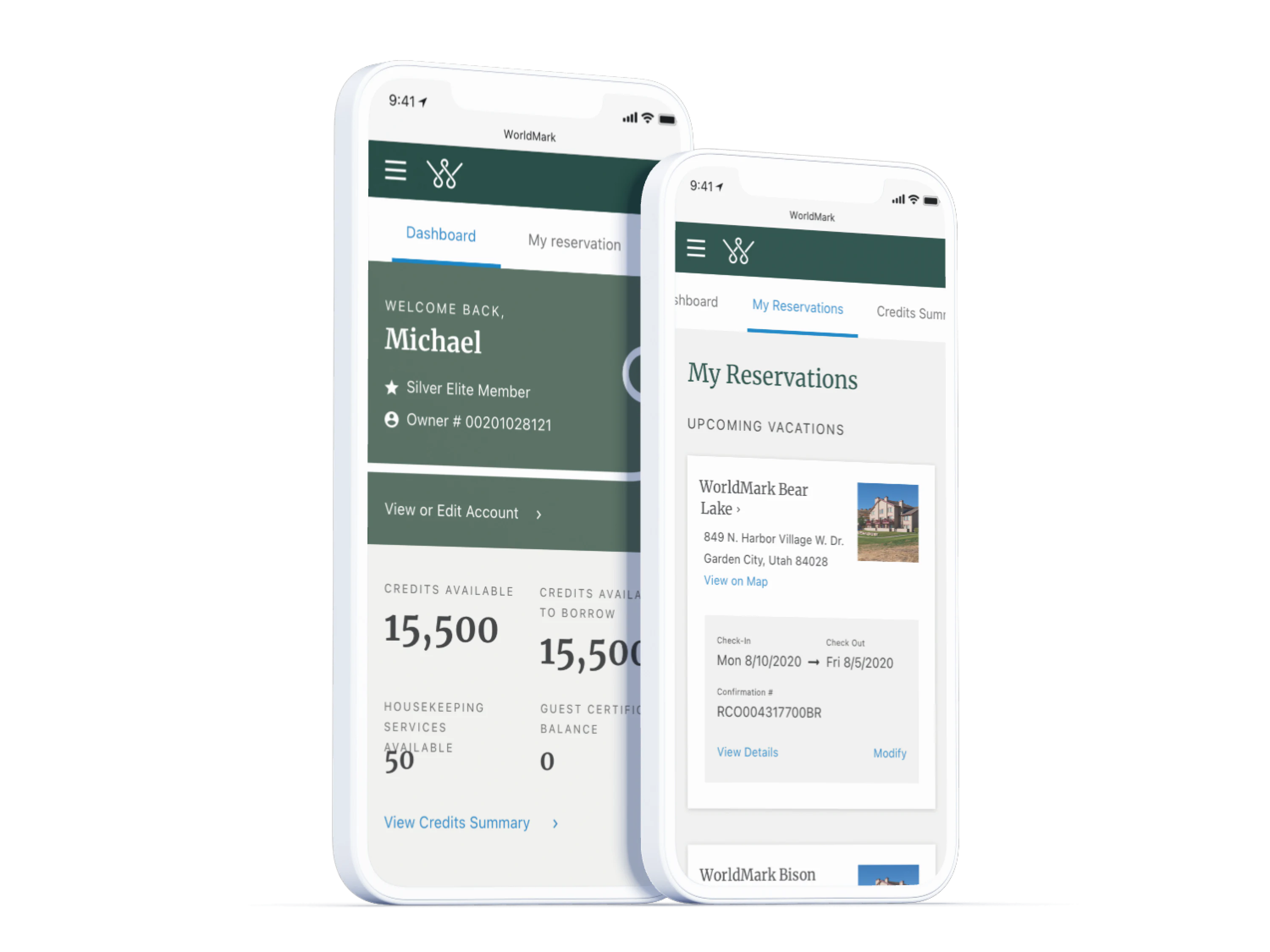
Dashboard, credits, and reservation management
Cross-brand
Recent queries, resorts, destinations, offers, and support content
Cross-brand
Shared resort architecture expressed through a distinct brand
Continue exploring